Palmetto bug vs cockroach: are they the same thing?
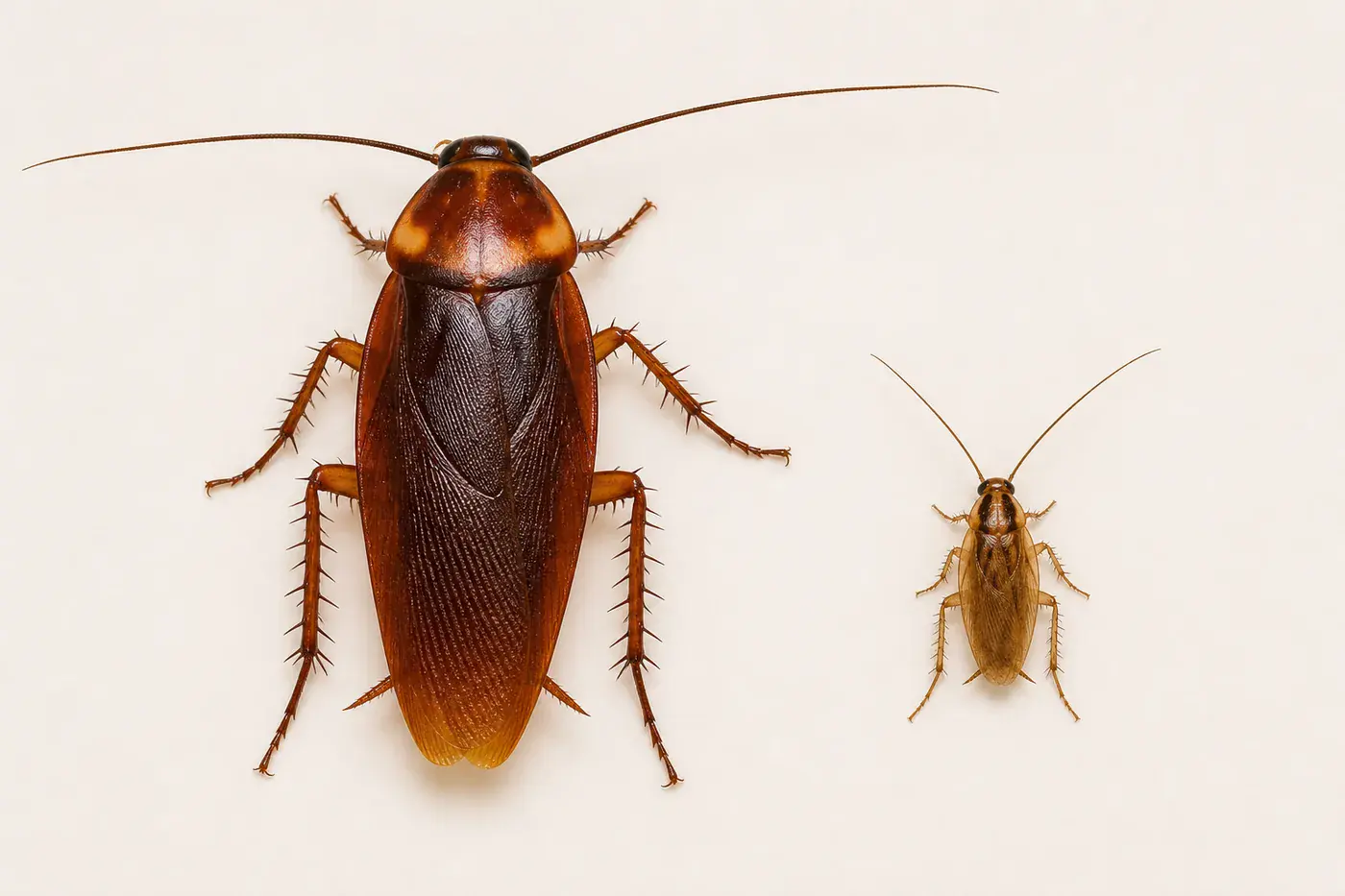
Yes. A palmetto bug is a cockroach, full stop, and in Columbia the name lands on the two big outdoor species, the American cockroach and the smokybrown. Nobody is fibbing. "There is a palmetto bug in the tub" just goes down easier at the dinner table. The question worth your time is which roach you actually have, because the two-inch visitor from the pine straw and the half-inch German cockroach breeding behind your dishwasher are opposite problems, and treating one like the other is how a Midlands kitchen loses a whole summer.
On this page
Is a palmetto bug the same as a cockroach?
A palmetto bug is a cockroach, and in Columbia the name almost always means the American cockroach or the smokybrown cockroach, the two big outdoor roaches that Clemson's Home and Garden Information Center lists among the state's most common large species alongside the oriental. The nickname comes from the sabal palmetto: the roaches shelter in the crowns and boots of the state tree, and somewhere along the way Carolinians decided the tree deserved the credit. The University of Georgia's extension service notes the label shifts with your ZIP code, so a Floridian's palmetto bug is a different species, the Florida woods cockroach. Clemson HGIC counts over 15 kinds of cockroaches in South Carolina and only a few ever come indoors. Two of those get called palmetto bugs. The third, the German cockroach, is the one nobody has ever bothered to give a polite name.
What waiting on the wrong roach costs a Columbia home
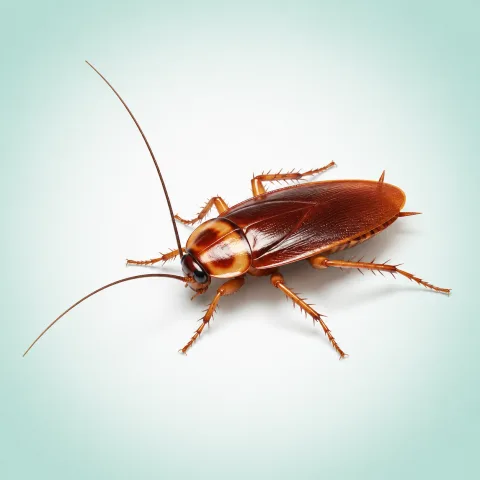
The expensive mistake is calling a German cockroach a baby palmetto bug, and here is how it plays out. You saw one small brown roach on the counter in March, decided it wandered in from the mulch, sprayed the baseboards and felt productive. Except a German female carries an egg case of 30 to 40 eggs underneath her until the day before they hatch, according to the University of Florida's entomology department, and she was never in the mulch. By June the warm cavity behind your dishwasher is a nursery. You reach under the sink for a sponge and two of them drop off the hinge. There are pepper-grain specks along the back of the silverware drawer, and that musty smell you have been blaming on the disposal is not the disposal. Clemson HGIC is blunt about what that means: the most serious medical problem cockroaches cause is the allergic reaction to their shed skins and droppings, and the EPA lists cockroaches and their droppings among the triggers that can set off an asthma attack. If a kid in the house uses an inhaler, that drawer stopped being a nuisance a while ago.
The palmetto bug version is slower, and just as real. A big American cockroach in the shower drain at 2 am after every thunderstorm, and you keep telling yourself it is the weather. Meanwhile the smokybrowns that came in off the oak limb resting on your roof have found the attic, which Clemson HGIC notes is exactly where they settle inside a house. None of this is a horror film. It is a cheap problem quietly turning into an expensive one while you wait for it to fix itself.
How to tell a palmetto bug from a German cockroach in ten seconds
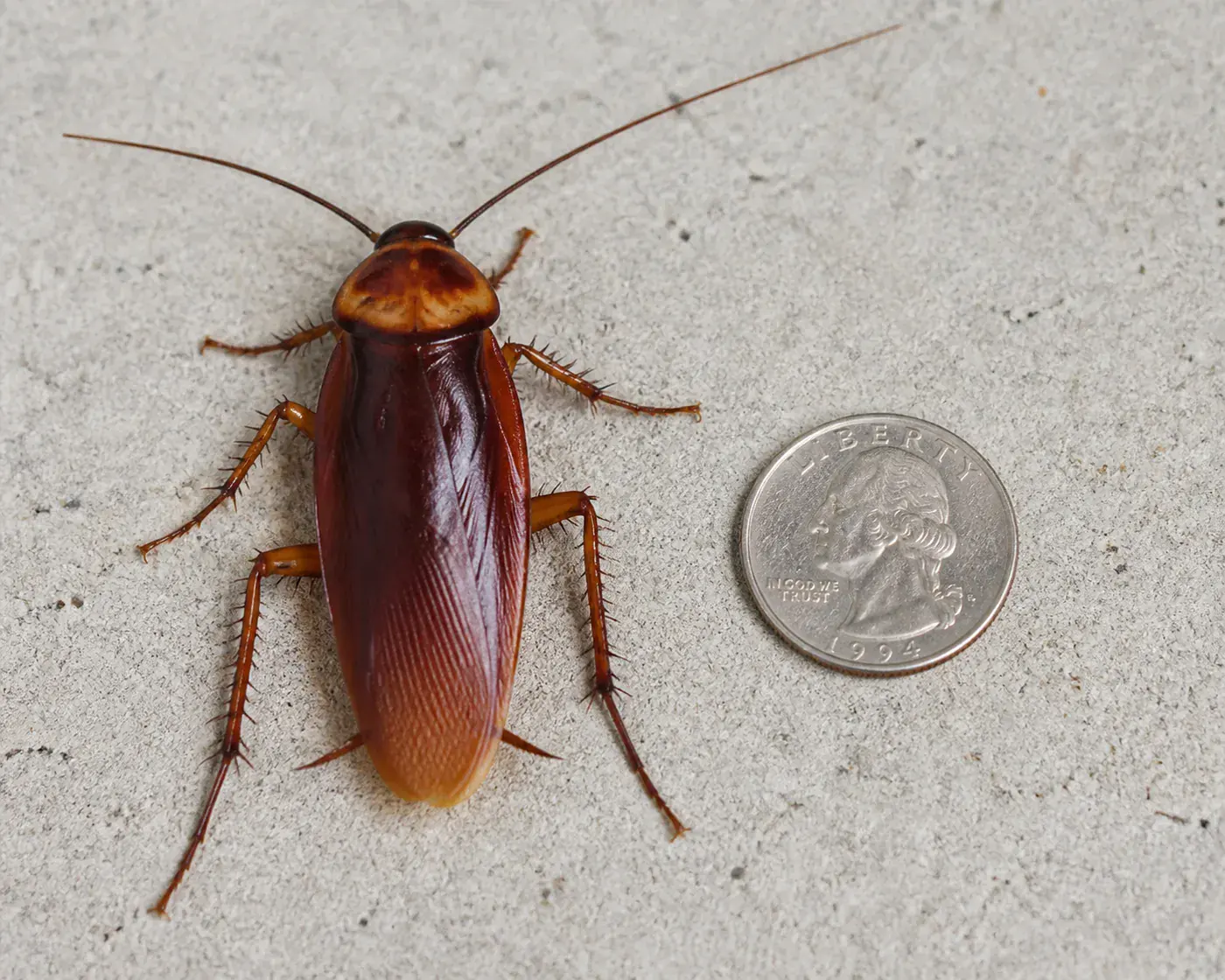
Size and the marking behind the head settle the palmetto bug question, and Clemson HGIC's descriptions are the ones to trust. Put the roach next to a quarter if you can stomach it, or take a phone photo and zoom in.
| Trait | American cockroach | Smokybrown cockroach | German cockroach |
|---|---|---|---|
| Called a palmetto bug? | Yes, constantly | Yes | No |
| Length | 1.5 to 2 inches | About 1.5 inches | 0.5 to 0.625 inch |
| Color | Red-brown | Uniform dark mahogany | Tan to light brown |
| Behind the head | Pale yellow halo | Evenly dark | Two dark parallel stripes |
| Flies? | May fly on warm evenings | May fly on warm evenings, comes to lights | Has wings, does not fly |
| Lives | Sewers, drains, crawl spaces, storage rooms | Mulch, log piles, gutters, trees, attic to crawl space | Kitchens and bathrooms, behind the fridge and stove, in cabinets |
| A sighting means | Outdoor pressure on the house | Outdoor pressure, often from the roofline | An indoor breeding infestation |
Bigger than the coin, it came from outside. Smaller than the coin with racing stripes, it lives with you. That second answer changes everything that follows.
What you can do yourself this weekend
The DIY that works on palmetto bugs is outdoor and structural, because the insect in your hallway was living in your yard an hour earlier. Clemson HGIC's exclusion list makes a solid Saturday:
- Pull mulch and pine straw back a hand's width from the foundation, and get firewood and stacked pots off the ground. Smokybrowns live in mulch and log piles.
- Clean the gutters and trim limbs off the roof. A gutter full of wet oak litter is smokybrown habitat, and the limb is the bridge to your attic.
- Fix weather stripping and door sweeps, check attic vent screens, and caulk the openings around drain lines and sewer vents. Steel wool is a fine temporary plug until you can caulk properly.
- Run water in unused showers and floor drains monthly so the P-traps stay full. A dry trap is an open door from the sewer, the American cockroach's favorite address.
- Boric acid as a thin film under the fridge, stove and sink and in wall voids, never on counters or shelves where food sits. Bait stations in cabinet corners and along the garage wall.
- Skip the fogger. It scatters roaches deeper into the walls and never reaches the yard, which is where the problem lives.
A German cockroach gets a different weekend: gel bait in pea-sized dots along cabinet hinges, behind the fridge and under the sink, sticky monitors in the corners so you can count instead of guess, cabinets emptied and degreased, the drip under the sink finally fixed. And no spray anywhere near the bait, because a repellent pushes the roaches away from the one thing that would have killed the colony.
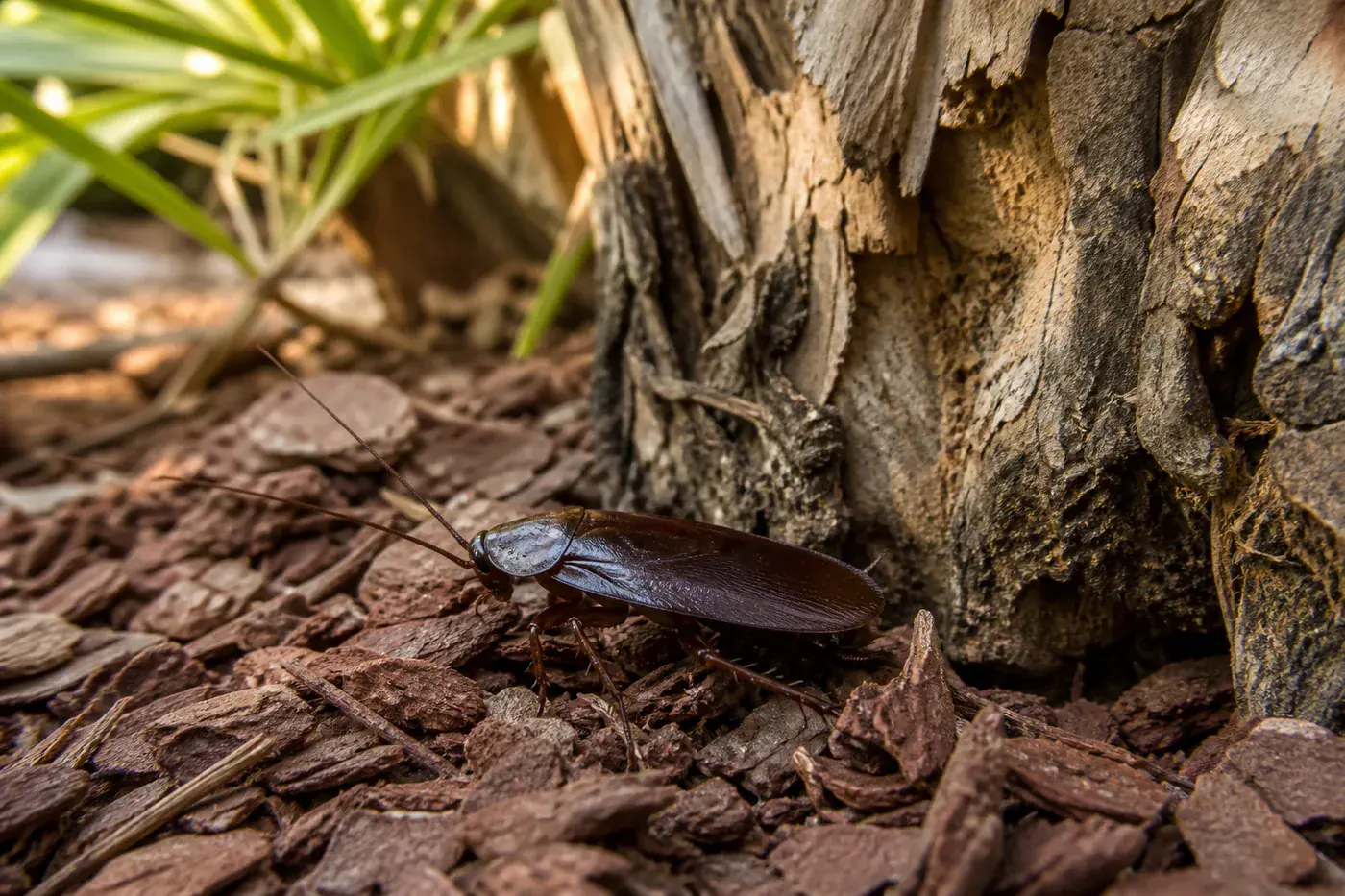
Home turf. Mulch against a trunk is where the outdoor half of the work happens.
When DIY is not enough: five signs the roach problem has outgrown the weekend
Some roach situations in Columbia are past the point where a caulk gun and a tube of gel will get you there, and these are the ones:
- Small striped roaches in daylight, or several at once. German cockroaches out in the open at noon means the hiding places are already full.
- Egg cases or pepper-like droppings in cabinet corners, drawer tracks or behind the stove. That is a breeding population, not a visitor.
- Roaches coming up out of drains or from behind the dishwasher week after week, even with the traps full. The route is structural, and it needs finding.
- Anyone in the house with asthma or allergies. The allergen load is the problem now, and it needs the population gone, not thinned.
- The source is the attic or crawl space and you cannot get in there safely. A crawl space treated badly is worse than one left alone.
Two or more of those describe your house? Then the sensible next step is a call, not another can of spray. Palmetto Pest Co is a free referral service: dial (866) 203-9397, describe what you are seeing and your part of the Midlands, and we connect you with a licensed local provider who prices the job on the call, with no obligation either way. A one-time roach treatment in the Columbia area commonly runs about $150 to $400, and a German cockroach program usually takes more than one visit; those are typical market ranges, not a quote. Same-day and 24/7 emergency services are subject to provider participation, location, technician availability, and demand. Availability is not guaranteed and may vary by market and appointment capacity. For the full treatment breakdown see palmetto bug control in Columbia, or compare all Columbia services and costs.
And the good news, because there is some. The big outdoor roaches are a fact of Midlands life, not a verdict on your housekeeping; Clemson HGIC says outright that cockroaches can be found anywhere, not only in unclean places. Seal the house, dry the perimeter, and the sightings drop to a couple of stragglers a season. A German infestation caught early is a bait job, not a demolition. The roach you name correctly is the roach you get rid of. For the step-by-step on the outdoor kind, read how to get rid of palmetto bugs.
Columbia palmetto bug FAQ
Are palmetto bugs and cockroaches the same thing?
Yes. A palmetto bug is a cockroach, and in Columbia the name almost always means the American cockroach or the smokybrown cockroach, the two large outdoor species. It is a regional nickname, not a separate insect, and it does not include the small German cockroach that breeds indoors.
Is a palmetto bug the same as a water bug?
In everyday Columbia usage, yes: water bug and palmetto bug are both polite names for the same large outdoor roaches, usually the moisture-loving American cockroach near drains and bathrooms. A true water bug is an aquatic pond insect that has no interest in your house. If it ran under the refrigerator, it was a cockroach with a nickname.
Do palmetto bugs bite?
Palmetto bug bites are vanishingly rare and not something Columbia homeowners need to plan around. The insect does not treat people as food; what most people actually feel is the scratch of spiny legs during a clumsy landing. The real concern with any cockroach is its shed skins and droppings, which Clemson HGIC identifies as the most serious medical problem cockroaches cause, through allergic reactions.
Does seeing a palmetto bug mean my house is dirty?
No. Clemson HGIC states plainly that cockroaches can be found anywhere, not only in unclean places, and palmetto bugs in particular breed outdoors in mulch, trees and sewers before wandering into even spotless Columbia homes. A steady indoor population is worth acting on; a single wanderer after a Midlands thunderstorm is ordinary.