Rodent control cost in Columbia, SC: mice and rat pricing

Rodent control in Columbia usually runs $150 to $400 for a one-time mouse or rat job, or $40 to $70 a visit on a quarterly plan, with the inspection at $0 to $150 and often free alongside a service quote. Sealing the holes, the part that ends the problem, is quoted separately. Where you land depends on the animal, the access, and how long it has been going on upstairs.
On this page
Rodent control cost in Columbia, SC, by the job
Rodent control in Columbia is priced by the job, not by the animal, so a mouse in the pantry and a roof rat over the bedroom share an invoice line and still cost different money. Access and visit count open the gap.
| Service | Typical Columbia range | How it is billed |
|---|---|---|
| Rodent inspection | $0 to $150 | Often free with a service quote |
| One-time mouse or rat job | $150 to $400 | Inspection, trap placement and follow-up visits |
| Quarterly rodent plan | $40 to $70 / visit | Monitoring and re-baiting year round |
| Exclusion (sealing entry points) | Quoted after inspection | Priced per opening and access difficulty |
| Attic or crawl-space cleanup | Quoted separately | Depends on droppings, nesting and insulation damage |
These are typical market ranges, not a quote. Your price is set by the local provider after an inspection.
Mice usually land in the lower half of that one-time band, rats in the upper half. Not because a rat is worth more, but because rats in a Midlands attic mean more stations and two or three return trips. Our Columbia rodent control page covers those visits.
What one Midlands winter of waiting costs you
Waiting on a rodent problem in Columbia costs more than the service call, because rodents breed while you think it over. A single female house mouse can produce 5 to 10 litters a year of about 5 to 6 young each, according to University of Nebraska-Lincoln Extension. Run that arithmetic on the two you heard in October.
Now picture the version nobody talks about. It is 1 a.m. in February, the heat pump cycles on, and directly above your headboard a roof rat is working the insulation off a live wire it has decided tastes fine. Rodent incisors never stop growing, so gnawing is maintenance, not mischief. Down in the pantry, droppings collect along the shelf edge, there is urine where you set the bread, and the cereal box your kid eats out of dry has a hole in the corner. You smell it before you see it. The CDC puts the point in one flat sentence: "It's easier to control rodents before they can become established."
No house-fire statistic from me, because the numbers that circulate online do not trace back to a source I can name. None is needed. Bare copper in an attic you never visit, plus shredded insulation that has to be hauled out, is why that cleanup line sits on the table above.
What moves a Columbia mouse or rat quote
Access moves a Columbia rodent quote more than the species does, because the whole job is built on reaching where the animals travel. After that:
- Attic or crawl space. A roof rat in a low, hot crawl space is slow, awkward work. Mice under the kitchen cabinets are not.
- How many openings. Exclusion is priced per hole and by how hard it is to reach. A worn garage sweep is cheap. Twenty feet of failed soffit is not.
- How long it has run. Two mice caught in week one is a one-visit job. A population that bred through winter is a program.
- A bid far below the others. Ask what it leaves out. Usually the sealing, which is the part you were buying.
One local aside: the gaps that let mice in also admit the big reddish roaches this town politely calls palmetto bugs. If both showed up this season, say so on the call, because palmetto bug control and rodent sealing overlap.
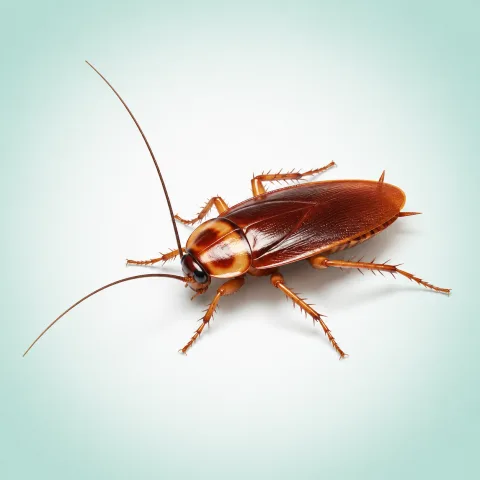
Same holes, different tenant. Sealing for mice evicts these too.
What you can do yourself, for free or close to it
Do-it-yourself rodent work is worth your Saturday in Columbia, especially the sealing, because the materials cost less than dinner. CDC rodent-proofing guidance is the clearest free checklist there is:
- Know the target size. The CDC says a mouse fits through a hole the width of a pencil, a quarter inch across. Hunt for gaps that small.
- Fill small holes properly. Steel wool, then caulk around it to hold it in place, or spray foam. Loose steel wool alone gets worked back out.
- Use metal on big holes. The CDC lists lath screen or lath metal, cement, hardware cloth and metal sheeting. Rodents chew foam. Hardware cloth, no.
- Work the CDC's search list. Inside: under and behind kitchen cabinets, closet floor corners, behind appliances, pipes under sinks and water heaters, floor and dryer vents, the attic. Outside: eaves and soffits, unstripped doors, the foundation-to-ground gap, crawl-space vents.
- Cut the food and the cover. Clemson's Home and Garden Information Center says to store seed and pet food in tightly closed containers and control weeds and debris around buildings. That open bag of dog food in the garage is doing more for your mice than anything else on the property.
- Set snap traps on the runs. Tight against walls, behind appliances, along sill plates, where the droppings already are. Clemson HGIC notes snap traps are nearly always lethal, which is the point: a quick kill beats a slow one.
- Skip the catch-and-release plan. Clemson HGIC is direct that state law may prohibit releasing an animal elsewhere, and says to check with the South Carolina Department of Natural Resources first.
- Leave poison for last, if at all. Oregon's Department of Fish and Wildlife fact sheet on anticoagulant rodenticides explains why: a dosed rodent turns lethargic and sits out in the open, so the hawk, owl or neighbor's cat that takes the easy meal takes the dose too.
While you are under there with the flashlight, look at the wood. Gnaw damage and termite damage share the same dark places and get confused constantly, so check what you find against our Columbia termite cost guide.
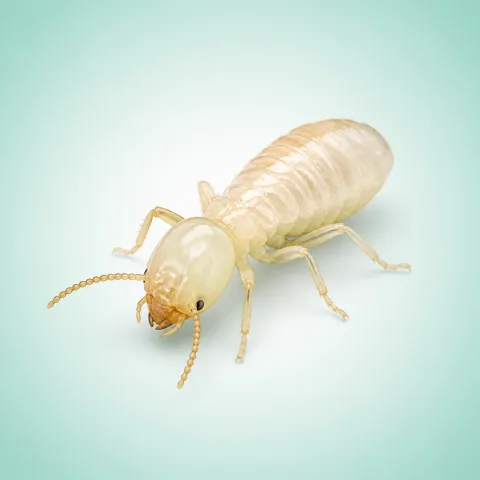
Chewed-looking wood instead of chewed wire? That is a termite conversation.
When DIY is not enough: four signs to call
Do-it-yourself rodent control stops being enough once the problem is bigger than the part of the house you can see. These four signs say you are there:
- Noise overhead, not underfoot. Scratching in the ceiling after dark usually means rats in the attic, and attics are where amateur trapping plans go to die.
- Traps keep catching. A week of catches and then more catches is not success. It is a breeding population telling you its size.
- You cannot find the hole. Droppings keep appearing after you sealed everything you could reach. The opening is in the soffit, the crawl space, or behind something built over it.
- Chewed wiring or heavy nesting. Bare copper, flattened insulation, a wall void that smells. That is an inspection, not a hardware-store weekend.
Recognize two or more of those? Then the sensible next move is a phone call, not another trip for traps. Call (866) 203-9397 and Palmetto Pest Co connects you with a licensed local provider covering your Columbia ZIP code, who can talk through what you are hearing, free and with no obligation. Same-day and 24/7 emergency services are subject to provider participation, location, technician availability, and demand. Availability is not guaranteed and may vary by market and appointment capacity. Ask for the provider's South Carolina license first, since applicators here are licensed through the Clemson University Department of Pesticide Regulation.
Then relax a little. Rodents are solvable, and most Columbia houses need one round of trapping plus one honest afternoon of sealing to be done for years. Get the sealing in writing and you are buying a fix, not a subscription. The rest of the local price list lives on the Columbia services and cost page.
Columbia rodent cost FAQ
How much does rodent control cost in Columbia, SC?
Rodent control in Columbia typically runs $150 to $400 for a one-time mouse or rat job covering inspection, trapping and follow-up visits, or $40 to $70 per visit on a quarterly plan. The inspection alone runs $0 to $150 and is often free when a service quote comes with it, and exclusion sealing is quoted separately after the inspection. These are typical market ranges, not a quote.
Do rats cost more to get rid of than mice in Columbia?
Rats usually land in the upper half of the Columbia range and mice in the lower half, though the animal matters less than where it is living. A few mice under a kitchen sink is a short job. Roof rats in an attic or a crawl space mean harder access, more traps and more return visits, which is what actually moves the invoice.
Can I get rid of mice myself?
A small, early mouse problem is often within reach of a homeowner, because snap traps and sealing materials are cheap and the method is no secret. CDC rodent-proofing guidance says to fill small holes with steel wool and hold it in place with caulk or spray foam, and to use lath screen or metal, cement, hardware cloth or metal sheeting on larger openings. What defeats most do-it-yourself attempts is not the trapping, it is finding every hole.
Does rodent control include sealing the entry points?
Not always, and that is the most important question to ask before you book. Many Columbia rodent quotes cover inspection, trapping and follow-up only, with exclusion sealing priced as separate work. Trapping clears the animals already inside while sealing stops the next ones, so a trap-only service tends to repeat every fall until the openings are closed.