Cockroach treatment cost in Columbia, SC: typical price ranges
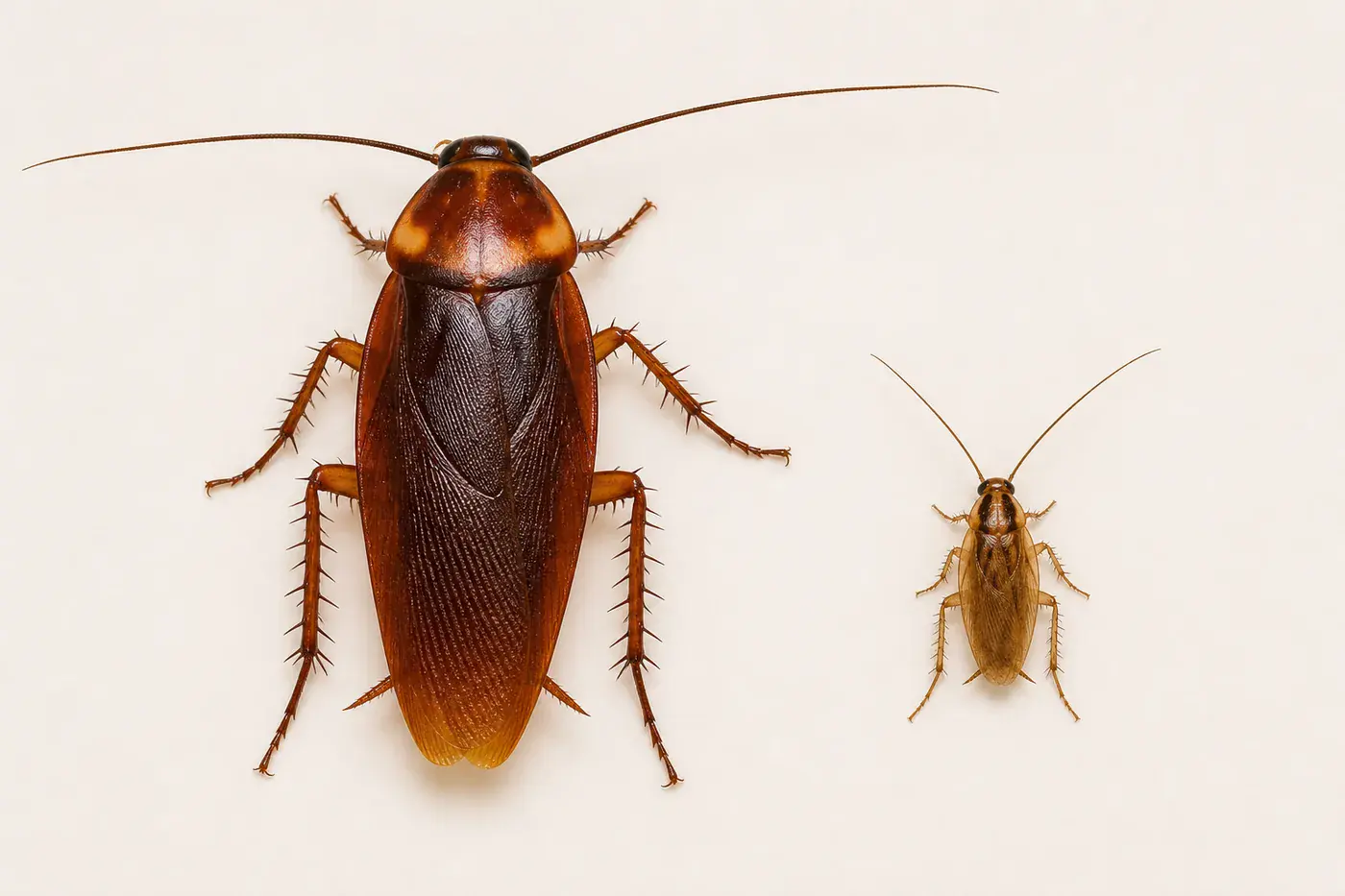
Cockroach treatment in Columbia typically runs $150 to $400 for a one-time visit, or $40 to $70 per visit on a quarterly plan. That is the whole headline, and you did not need three paragraphs of throat-clearing to get it. The useful part is what sits underneath: which roach you have decides which of those numbers applies to you, and it can double the bill.
On this page
What cockroach treatment costs in Columbia
Cockroach treatment in Columbia comes in three price shapes: the single visit, the ongoing plan, and the multi-visit German cockroach program.
| Service | Typical Columbia range | Notes |
|---|---|---|
| Inspection and quote | Usually free | Folded into the treatment quote |
| One-time roach treatment | $150 to $400 | Interior work plus an exterior barrier |
| Initial visit on a quarterly plan | $100 to $250 | First knockdown, often discounted |
| Quarterly plan | $40 to $70 / visit | Holds the barrier through Midlands summers |
| German cockroach program | $250 to $600 total | Several visits across roughly one to two months |
| Crawl space or exclusion add-on | $100 to $250 | Sweeps, vent screens, sealing entry points |
These are typical market ranges, not a quote. Your price is set by the licensed local provider after seeing the home. Deciding between a single visit and a plan across all pests, not only roaches? See one-time vs recurring pest control cost in SC.
What actually moves your price up or down
The single biggest price driver in a Columbia roach quote is the species, not the square footage. A palmetto bug, meaning the American or smokybrown cockroach, lives outdoors and wanders in. Clemson's Home and Garden Information Center places the smokybrown in mulch, log piles, thick vegetation, gutters around roofs and in trees, especially palmettos. Treating that is a perimeter job with a known scope. The German cockroach, half an inch, tan, two dark stripes behind the head, is breeding in your kitchen cabinets, and that is a campaign. If you have not pinned down which one you have, spend two minutes with our palmetto bug vs cockroach guide before you call anybody, because it changes what you should be quoted.
After species, the swing factors are predictable: home size, crawl space condition, how many rooms show activity, whether exclusion work is bundled in, and one-off versus plan. A bungalow off Rosewood with one nervous sighting is not the same job as a big house in Irmo with roaches in the kitchen, the garage and the attic.
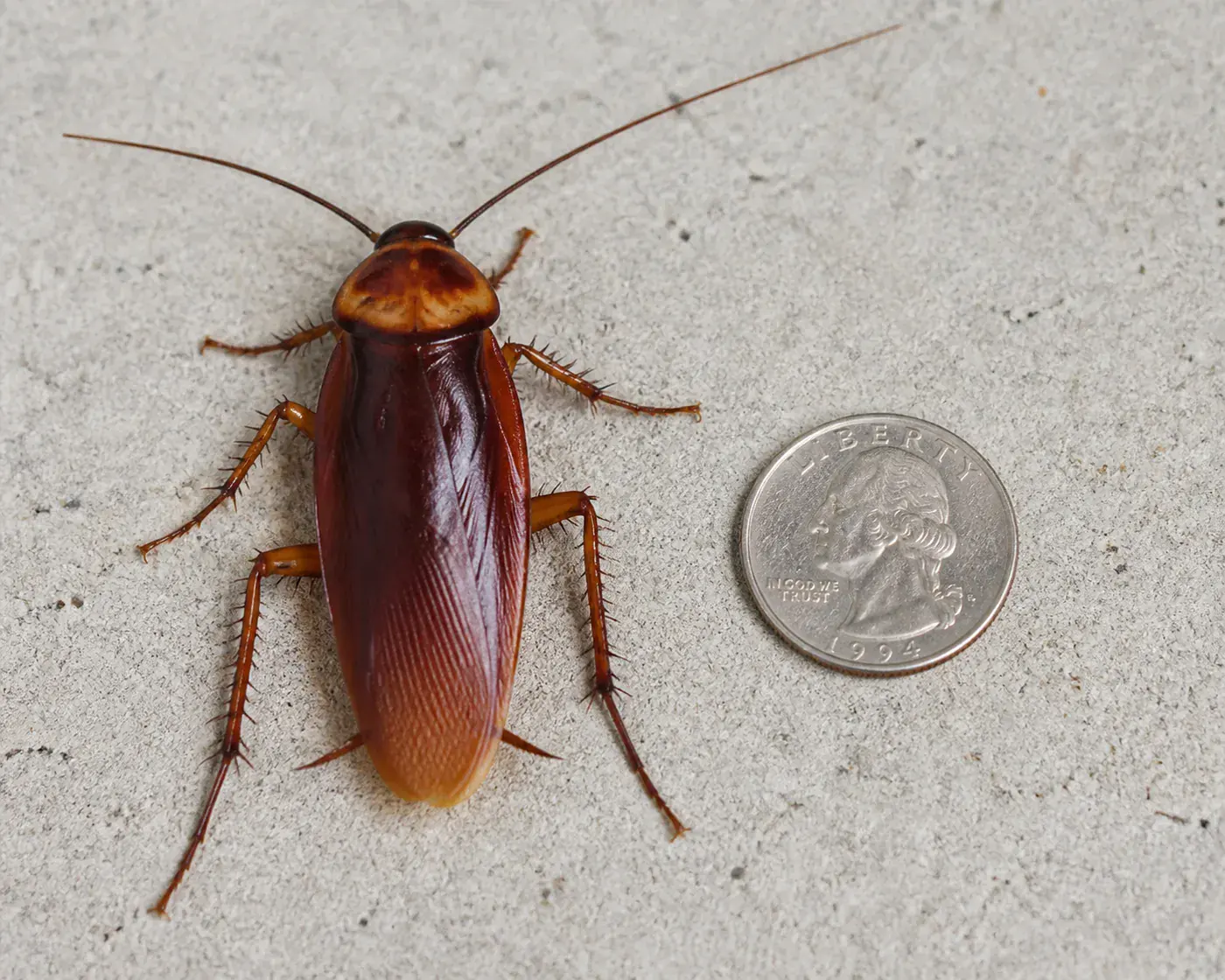
Size sorts the bill. Big and reddish brown means a perimeter job. Small, tan and striped means an indoor breeding population, and a longer schedule.
What another month of waiting actually costs
Waiting is expensive with German cockroaches specifically, because the price of the job grows while you think about it. Picture what is happening behind your refrigerator tonight. That warm motor housing is the best real estate in the house, and Clemson HGIC puts German cockroaches exactly there: around sinks and drains, behind refrigerators and stoves, and in cabinets. A female is carrying an egg case tucked under her body. Each one holds thirty to forty eggs, and they hatch in about two weeks. You go to bed. The house goes quiet. Two weeks later there are forty more, and the ones you saw are already carrying the next case.
Then there is the part nobody photographs. Every roach in that population is shedding skins and leaving droppings in the seams of your cabinets, and Clemson HGIC states plainly that the most serious medical problem associated with cockroaches is the allergic reaction many people have to their shed skin and droppings. The EPA lists cockroach droppings and body parts among the indoor triggers that set off asthma symptoms, especially in children. So the real cost of a slow month is not just a bigger bill. It is your kid coughing at three in the morning in a room where the return vent has been quietly circulating the dust of an infestation you kept meaning to deal with.
The outdoor roaches are a gentler story, and it is fair to say so. A palmetto bug flying at your face in the laundry room is unpleasant, not a health emergency. The waiting cost there is just money: the mulch bed and the wet crawl space keep producing them, so a problem you could have closed in one visit becomes a standing feature of every August.
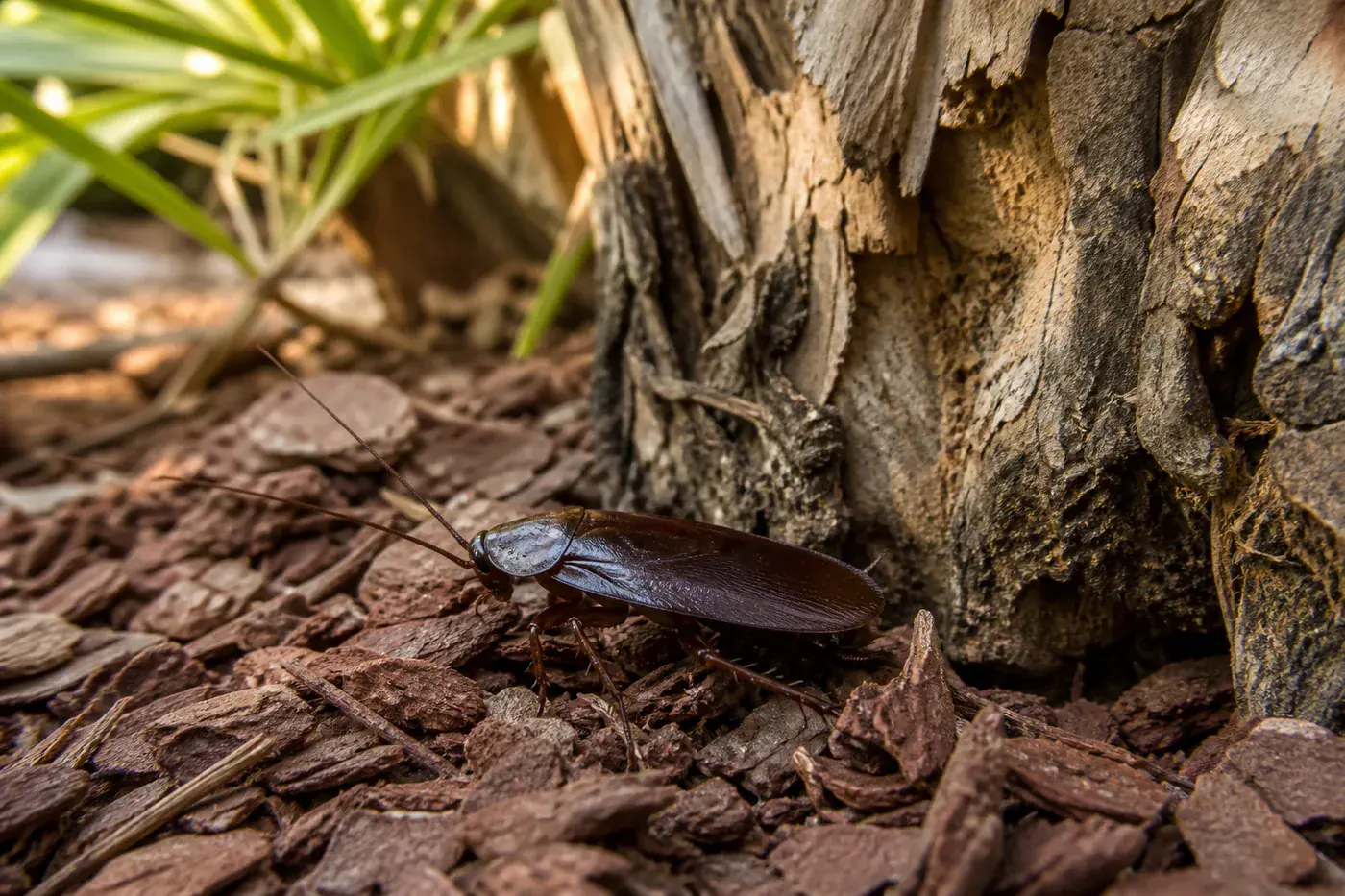
The mulch line against your foundation is where the price of an outdoor roach problem is set, long before anyone quotes you.
What to do yourself before you pay anyone
Plenty of Columbia roach problems are worth a weekend of your own labor first, and a provider will quote you lower afterward because the easy conditions are gone. Work this list top to bottom:
- Pull the mulch and pine straw back to a hand's width of bare soil against the foundation, and get firewood, pots and bricks off the ground.
- Clear the gutters and extend the downspouts so roof water lands away from the house. Smokybrowns shelter in gutter litter, so this is not just yard tidiness.
- Fit door sweeps on every exterior door, garage included. If daylight shows under the door, that is the front entrance.
- Seal where pipes and cables pass through the wall, and screen crawl space and attic vents.
- Set gel bait and stations low and dark: back of cabinets, under the sink, behind the water heater, along the garage wall.
- Lay boric acid dust as a thin film in out-of-the-way places, which is how Clemson HGIC recommends it, under refrigerators, stoves and sinks. A visible white ridge just gets walked around.
- Run the water in guest bathrooms and floor drains monthly so the P-traps stay full. A dry trap is an open pipe.
- Skip the fogger. It scatters roaches deeper into wall voids and does nothing outdoors, which is where most Midlands roaches live.
For the full outdoor sequence, our guide on how to get rid of palmetto bugs walks through the order that holds. Do this properly and a fair number of houses never need to make the call at all.
When DIY is not enough: five signs to stop and call
Stop self-treating and get a quote when your Columbia roach situation shows any of these, because each one means the population is beyond what retail products reach:
- Small tan roaches with two dark stripes, in the kitchen. That is a German cockroach, breeding indoors on a two-week hatch cycle, and yard work does not touch it.
- Roaches in daylight. One out in the open on a Tuesday afternoon usually means the hiding places are full.
- Sightings continue two to three weeks after you baited and sealed. The source is somewhere you have not found, often the crawl space or a shared wall.
- Droppings that look like coarse black pepper in cabinet corners, drawer runners or along the counter lip. That is a resident population, not a visitor.
- Anyone in the house has asthma or allergies and symptoms track with the sightings. At that point this is an indoor air problem and not a nuisance.
Seeing yourself in that list? Then a call is the sensible next move, not a panic button. Dial (866) 203-9397 and Palmetto Pest Co connects you with a licensed local provider covering your Columbia ZIP code, who gives you a real price for your case on the call, free and with no obligation to book. Same-day and 24/7 emergency services are subject to provider participation, location, technician availability, and demand. Availability is not guaranteed and may vary by market and appointment capacity. Ask for the South Carolina applicator license number before work begins, since the Clemson Department of Pesticide Regulation is the state agency that licenses commercial applicators here.
None of this is a crisis if you move on it. Most Columbia roach jobs are ordinary work at ordinary prices, and the households that pay the most are the ones that waited two seasons, not the ones with bad luck. Compare the full local price list on our Columbia services and cost page, or read the treatment detail on palmetto bug control in Columbia, then decide at your own pace.
Columbia roach cost FAQ
How much does cockroach treatment cost in Columbia, SC?
A one-time cockroach treatment in Columbia commonly runs $150 to $400, and a quarterly plan that keeps the exterior barrier maintained typically runs $40 to $70 per visit, often after a discounted first service of $100 to $250. A German cockroach program takes several visits and commonly lands between $250 and $600 in total. Those are typical market ranges, not a quote, and the licensed local provider sets your price after seeing the home.
Is a one-time cockroach treatment enough in the Midlands?
For the big outdoor roaches, a one-time treatment knocks the population down but does not remove the source, because Clemson HGIC places smokybrown cockroaches in mulch, log piles, thick vegetation, gutters and trees, especially palmettos. Columbia never gets a winter cold enough to clear that out, so the pressure on your foundation returns. For German cockroaches breeding indoors, one visit is almost never enough on its own.
Why does German cockroach treatment cost more than palmetto bug treatment?
German cockroach work costs more because it is an indoor breeding population rather than an outdoor one wandering in. Clemson HGIC notes each German cockroach egg case holds thirty to forty eggs that hatch in about two weeks, so a provider has to bait through several hatch cycles instead of treating a perimeter once. Expect a schedule of visits over roughly a month or two rather than a single appointment.
Should a cockroach inspection cost anything in Columbia?
Most Columbia-area providers fold the inspection into a free treatment quote, so paying separately for a look at a roach problem is uncommon. Call, describe what you are seeing and where, and you get a price and a scheduling window on the call with no obligation to book. Real-estate or wood-destroying-insect reports are a different product and are priced on their own.